



PROJECT DETAILS
Facility:
WinStar Golf Club
Opening Date:
Summer 2026
Location:
Thackerville, OK
Architect:
D.A. Weibring and Steve Wolfard; Renovation team: Agronomic Operations Director Charles Wise and Rob Addington, president of Silverleaf Sports Management
Fun Facts:
487 truckloads of Tahoma 31 sod were used to plant the two golf courses
Where Planted:
Tees, fairways, rough, golf academy, and driving range
About the Project

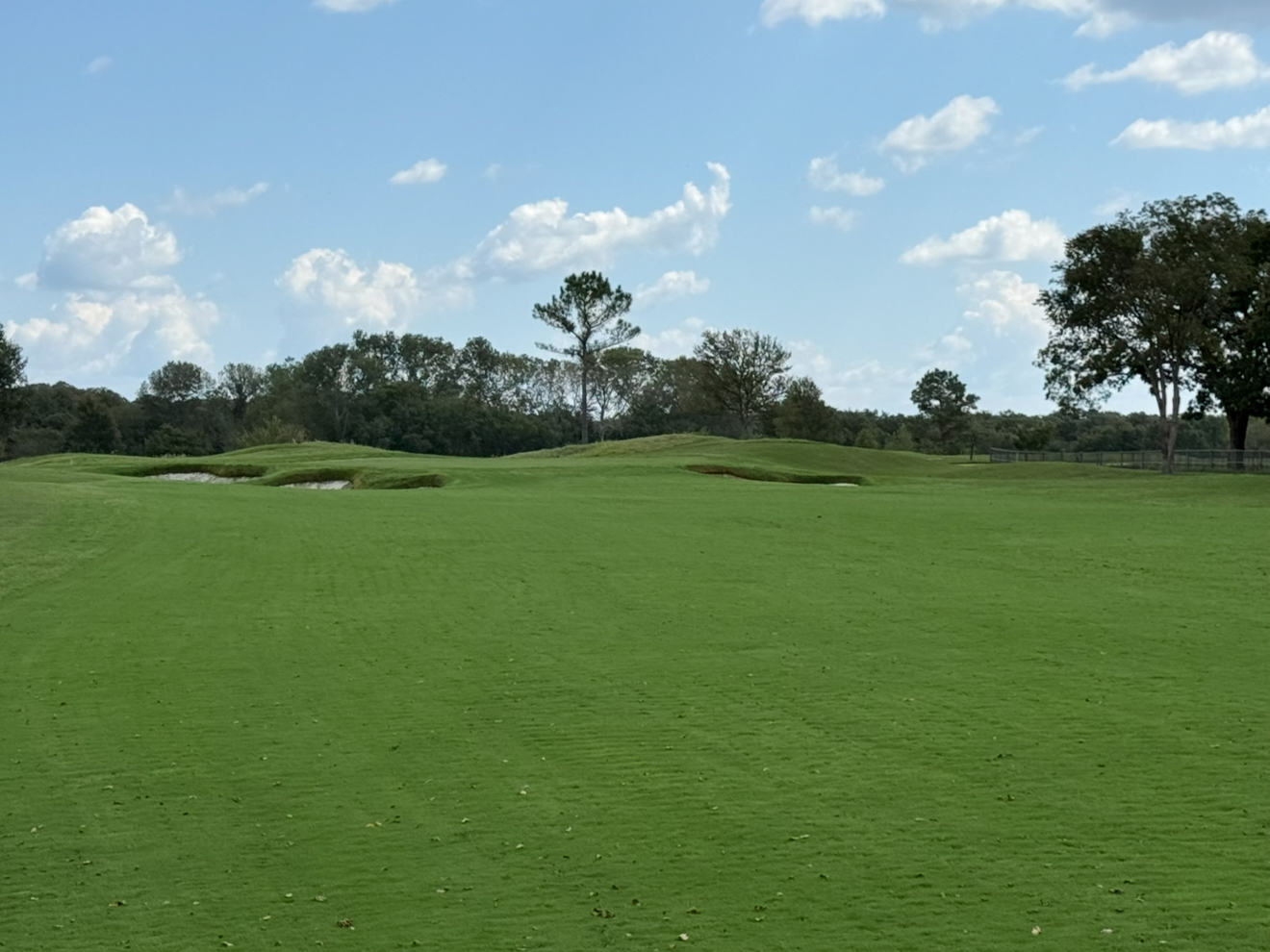
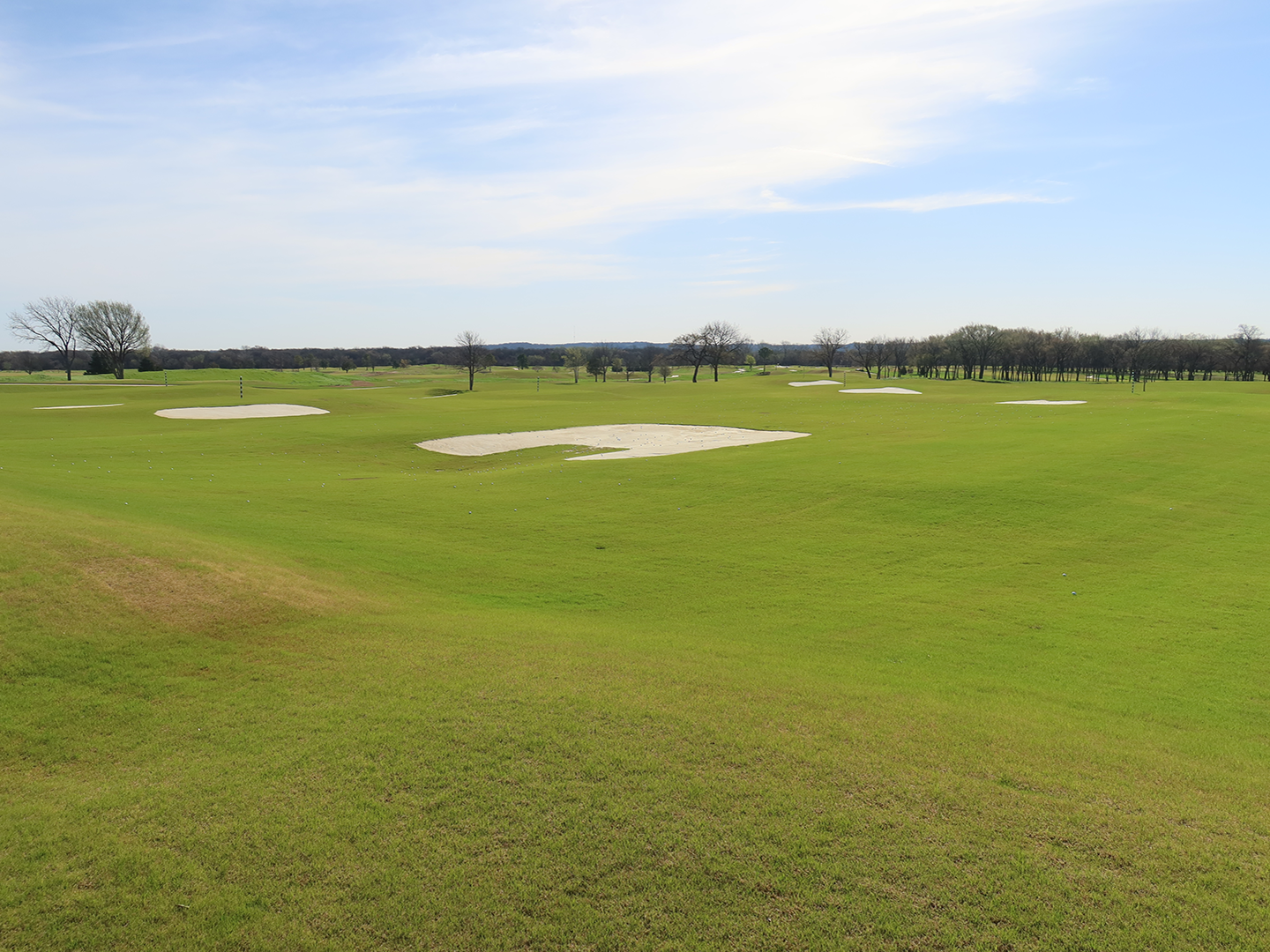
The two resort courses at Oklahoma’s WinStar World will reopen summer 2026 following a $22 million renovation that included a complete remediation of the soil and a conversion to Tahoma 31 bermudagrass fairways, collars, tees, golf academy practice area, and driving range. It’s a sure bet the golfers will take note of the new playing surfaces.
WinStar, a casino resort owned by the Chickasaw Nation, llocated just north of Dallas in the rolling plains of the Red River Valley, the region is significantly affected by natural saltwater from tributaries of Lake Texoma that release up to 3,450 tons of salt per day. PTwenty years of irrigation with such poor-quality water turned the soils below the grassed surfaces into the equivalent of cracked concrete that strangled the grass’s root zone until much of what was above ground was bare patches and dust.
PROJECT DETAILS
Facility:
WinStar Golf Club
Opening Day:
Summer 2026
Location:
Thackerville, OK
Architect:
D.A. Weibring and Steve Wolfard; Renovation team: Agronomic Operations Director Charles Wise and Rob Addington, president of Silverleaf Sports Management
Fun Facts:
487 truckloads of Tahoma 31 sod were used to plant the two golf courses
Where Planted:
Tees, fairways, rough, golf academy, and driving range
Site Work on the Golf Course
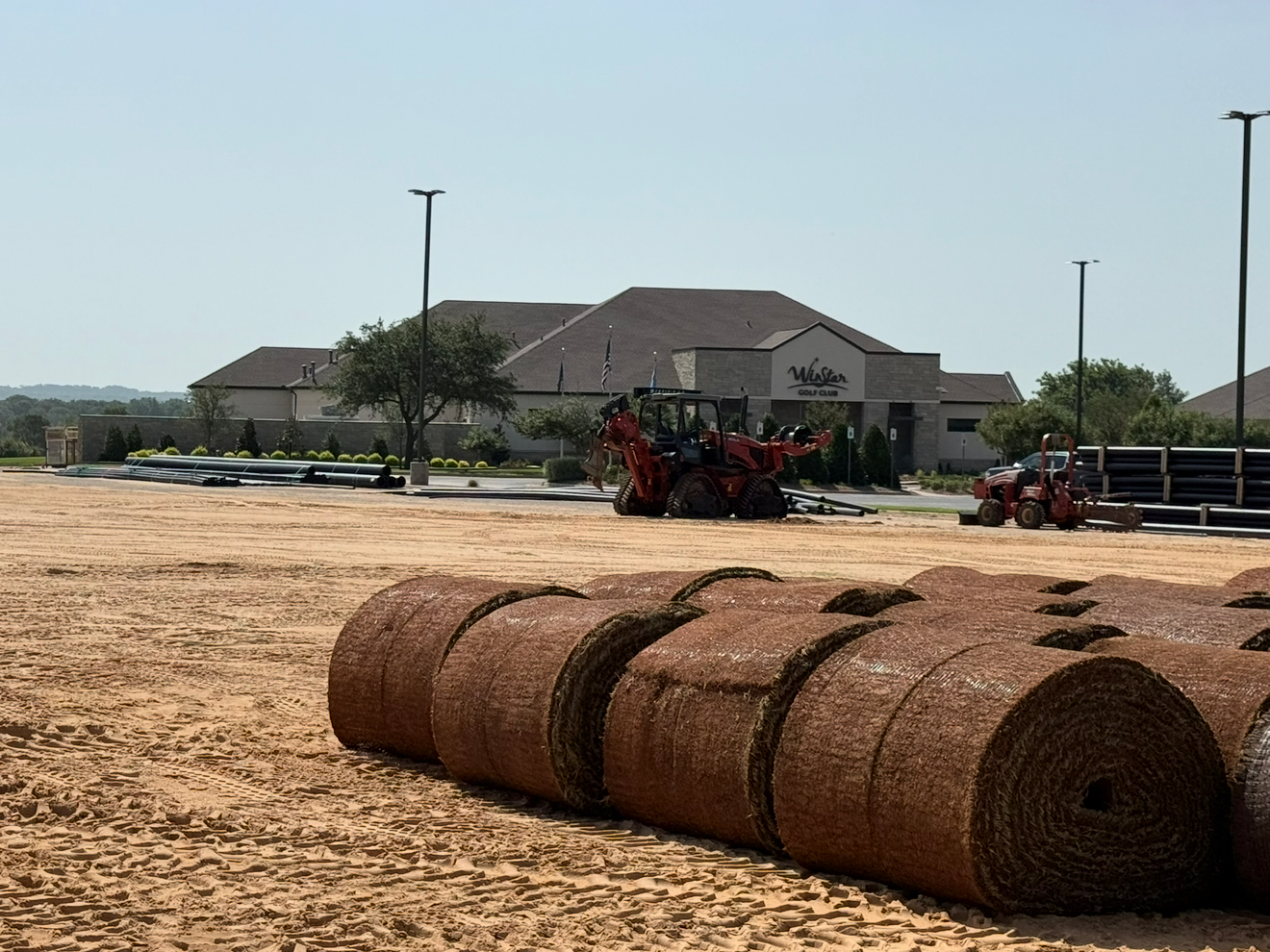
Rob Addington, president of Silverleaf Sports Management, the firm that spearheaded the renovation, explains, “We dug down 12 inches, tilled 12 inches, added compost, and 2 inches of sand on the 36-hole property. We broke two chisel plows trying to dig that out.”
Wise says the soil was further remediated with injected gypsum plus layers of compost and chicken litter, then capped with 200 truckloads of sand. To protect against future salt damage, the club will invest in a new reverse osmosis irrigation system.
Tahoma 31 Grass Selection for Playability and Maintenance
Addington knew which grass he wanted to plant on the golf courses at WinStar, but needed buy-in on his recommendation. He, Wise and WinStar’s head golf pro, took a roadtrip to play some of the region’s top-rated golf courses grassed with bermudagrass.
“We spent some time with the golf course superintendents at all of those courses to visit with them about maintenance and the quality of the playing surfaces,” Addington says.
One of the courses they visited was Brook Hollow Golf Club in Dallas, where Addington is a member. Consistently ranked among the best golf courses in Texas, and in Golf Digest’s Top 200, Brook Hollow was grassed with Tahoma 31 everywhere except greens during the 2021 Keith Foster renovation of the 1921 A.W. Tillinghast design.
“Once everyone saw the Tahoma 31, it became an easy choice because of the quality of the playing surface,” Addington says.
Wise recalls having a similar reaction. “I think once you play golf on it, it speaks for itself. The ball sits up better, and if you get a lot better lies, we thought that would be really something for golfing customers to experience.”
This is especially true at a facility like WinStar where the two courses are positioned for two distinct clientele. The Redbud course, (7,000 yards, par 72) is targeted at casual, resort golfers looking for a fun bit of entertainment in between visits to the casino. The Scissortail course, (7,200 years, par 72) is conversely targeted at serious golfers looking for a championship-level round of golf.
For ongoing maintenance, Addington adds that Tahoma 31 “does stay greener longer and greens up early; for a resort that was important. Without having to overseed, which was something we did not want to do, to be able to say high-end quality clubs are choosing that grass was also an influence” in the selection.
Golf Course Grow-In
Because the soil remediation work was so intensive in time, effort, and monetary investment, the agronomy team decided to sod the course instead of sprigging it. That decision meant that grass could go down in the short window of the summer and early autumn, before winter set in, and still be on track for a summer 2026 open.
Licensed Tahoma 31 grower Brad Sherry, CEO and third-generation owner of the Oklahoma-based sod farm Sod By Sherry, is located 148 miles from WinStar. Sherry met every two weeks with the WinStar team to plan logistics. Harvesting started July 7, 2025, and finished three months later on October 7th.
Tahoma 31 was developed by the turfgrass experts at Oklahoma State University. Chad Adcock is Vice President of Business Development for Sod Production Services, the company that licenses sod farms to grow Tahoma 31 under agreement with OSU. He visited the WinStar project in July 2025 and, with Sherry, met with tribal leaders to inspect the progress and answer questions about the grass.
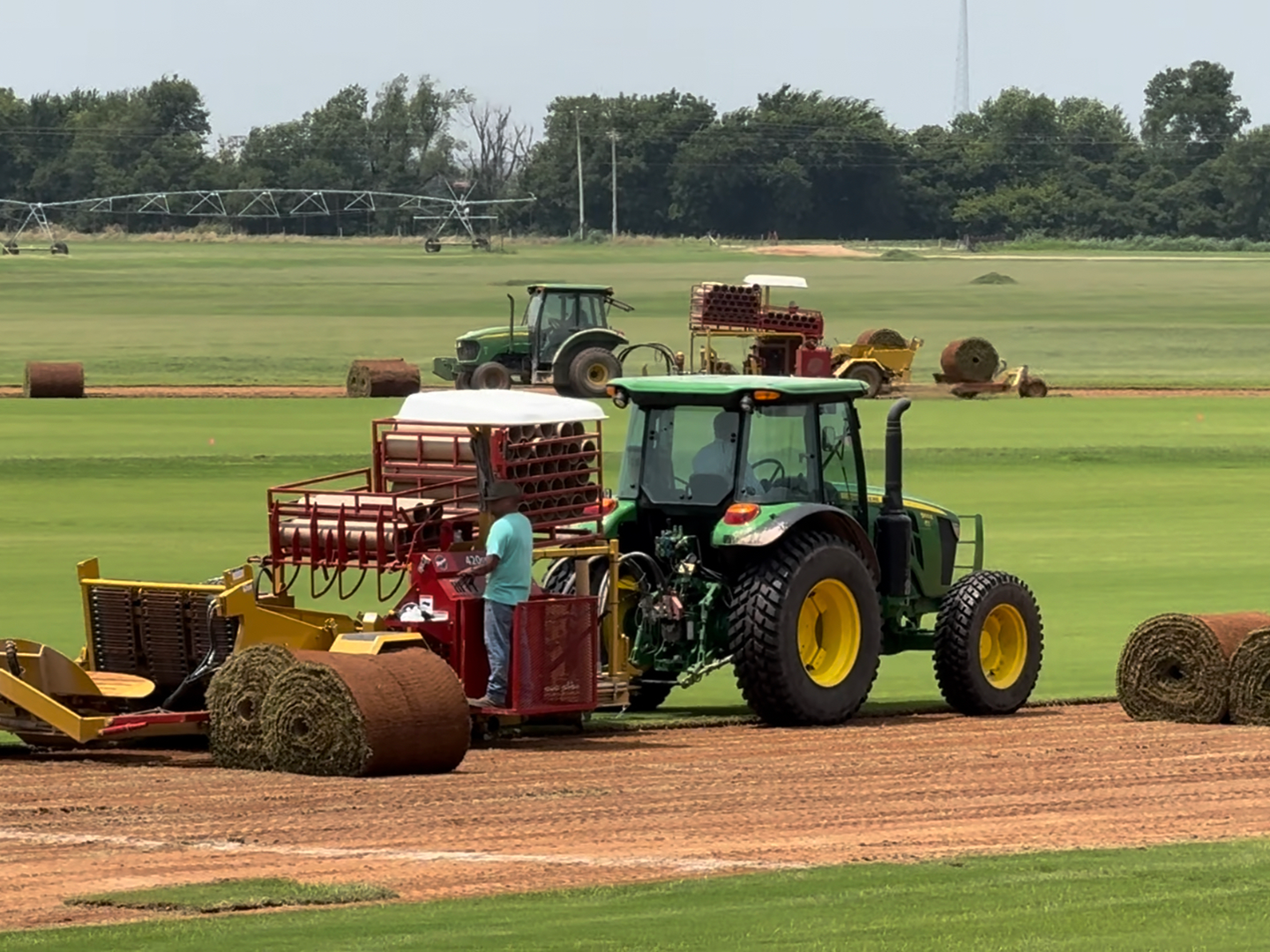
In all, Sherry sent 487 truckloads for a total of 112 acres of sod to WinStar. To keep up with that amount of sod on a continuous basis, Sherry’s crew ran three harvesters simultaneously to produce 20 truckloads of fresh-cut sod per day. “The sod was cut to order in the mid-afternoon. We’d load trucks until dark. Trucks would haul overnight and be onsite at the crack of dawn to be unloaded and installed by noon the next day. Our goal was 16 hours between lift and installation,” Sherry says.
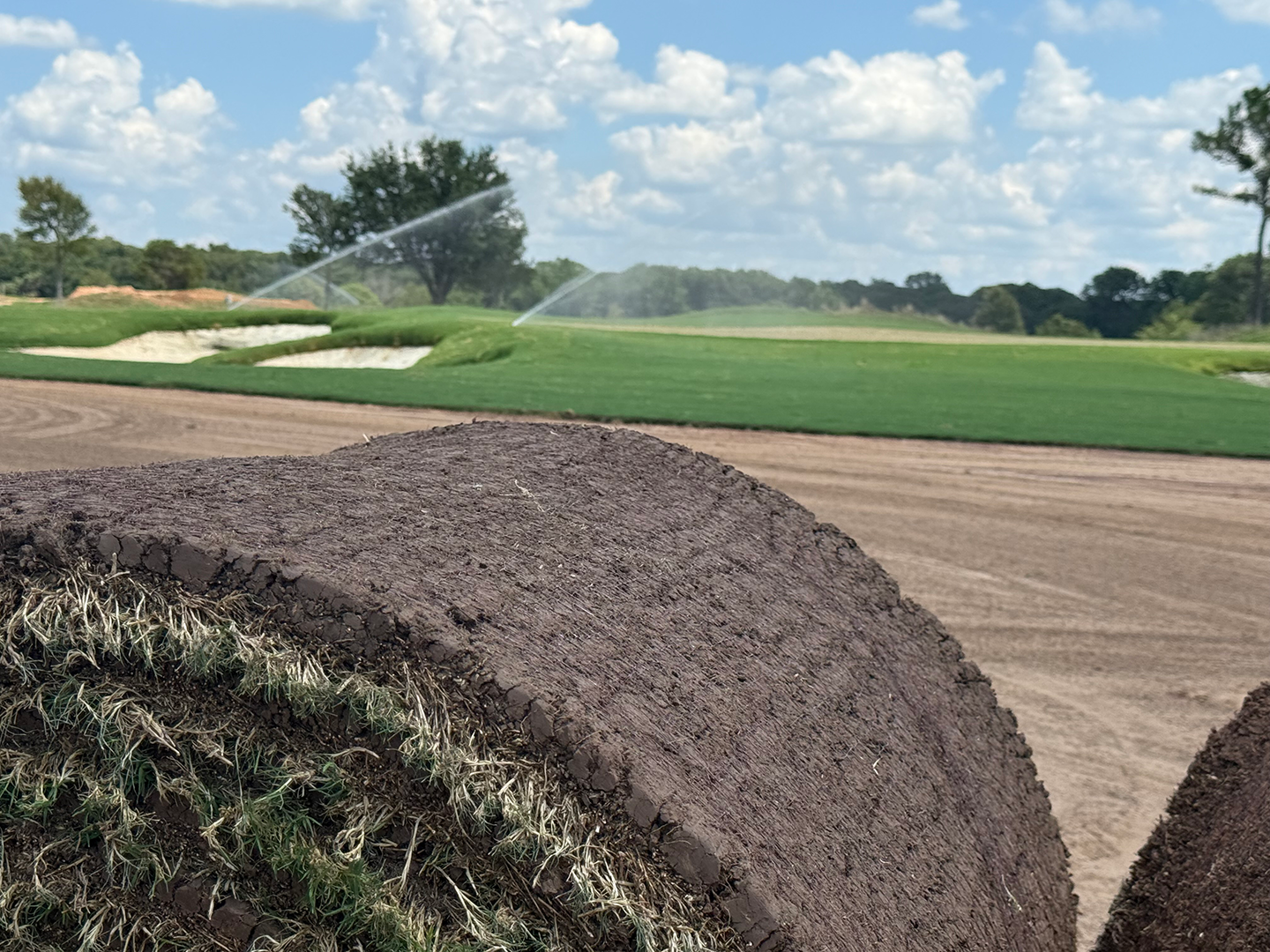
Sod for the fairways and tees was harvested from fields with a 63-percent sand base. WinStar’s Golf Academy short game practice area, and the driving range tee box were planted from a two-acre field specifically capped with Sherry’s 90-percent USGA sand mix to encourage faster re-growth in divot-prone areas. Sod was delivered at a Height of Cut of ⅝-inch (.625-inch).
Greg Smith, construction superintendent with Fleetwood Services, installed the grass at WinStar. “One thing I did notice was that it rooted very quickly.”
Wise agrees. “I was very impressed by how well and how quickly it rooted in. It was rooting in, tacking down, within two or three days. We were mowing on this stuff within seven days.”


